Are Ripped Hands Still Cool in CrossFit?
The Dilemma of Shredded Palms in CrossFit: Strategies for Optimal Grip and Hand Protection
For enthusiasts of CrossFit, the tell - tale sign of intense training often manifests as shredded palms, a consequence of incessant bar - related exercises. But the question remains: is this a mark of dedication or a preventable issue?
The Fallacy of Shredded Hands as a Training Milestone
Is a torn hand an indication of being on the right training track? Absolutely not. Similar hand injuries can occur in various activities such as rock climbing, rowing, or gymnastics. A simple rule should be observed when dealing with activities that risk skin abrasion: if it impedes your training, it's detrimental. In a competition, while some injuries might seem inevitable, maintaining maximum functionality by minimizing blood loss from the palms is crucial.
5 Proven Methods to Maintain a Firm and Smooth Grip
1. Master the Right Grip Technique
Irrespective of your skill level, grip technique is paramount. How you grasp the bar can significantly impact the stress on your palm skin. Consider the following: are you gripping the bar deep in the palm, or more around the base of your fingers? Emulate rock climbers who rely more on finger strength than palm gripping. Remember, you're pulling, not pushing. Placing the bar too deep in the palm creates skin folds, increasing the risk of rips. Cuts and callouses should be seen as warning signs, guiding you towards a more effective grip.
2. Evaluate the Use of Workout Gloves
Workout gloves, the finger - less variety, are often stigmatized in gym environments. However, there's no reason to scorn their use. While numerous manufacturers promote CrossFit - suitable gloves, their practicality is debatable. In weightlifting, touch is as important as grip. Gloves can be thick and restrictive, potentially interfering with proper hand positioning and technique, despite offering hand protection.
3. Consider Gymnastics Hand Protectors
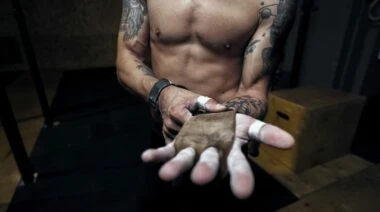
Hand protectors, on the contrary, have gained popularity. In the early days of CrossFit, they were scarce, with first - aid tents at competitions filled with injured hands being treated with antiseptics and tape. Today, with increased awareness, companies like Victory Grips and Bear KompleX have developed specialized products for the CrossFit community, receiving consistently positive reviews. Although pricey, they are a worthy investment compared to some high - end training tees that end up discarded quickly. For serious CrossFitters or competitors, hand grips are a no - brainer.
4. Use Chalk Judiciously
Chalk is a double - edged tool. In moderation, it keeps hands dry, improving grip and reducing the likelihood of tight gripping, which helps prevent callouses. However, over - application can create excessive friction. Be conservative with chalk use and dry your hands with a towel between sets. You can also opt for liquid chalk, like Spider Chalk, which some athletes swear by for the sticky film it creates on the palm. Alternatively, traditional weightlifting chalk offers an affordable option.
5. Prioritize Hand Grooming
There's no shame in moisturizing and protecting your hands. More importantly, develop the habit of reducing callouses and smoothing rough skin from lifting, bar, ring, and rope work. Stores like Wodwelder offer products such as lotions, callous shavers, pumice stones, and salves tailored for CrossFitters. Remember, unless you're a full - time CrossFit athlete, you likely have a day job. Presentable hands are essential in professional settings.
Blood, Guts, and Glory in CrossFit Workouts
During the CrossFit Open and Games seasons, the risk of shredded palms is particularly high. However, as outlined above, preventive measures can be taken. For the nine months of off - season training, optimal performance should be the goal, with callouses being an expected but manageable outcome, not bleeding. The question of whether ripped hands are "cool" in CrossFit has a clear answer: they are not. Athletes, whether in CrossFit, rowing, or rock climbing, should take proactive steps to protect themselves. While injuries are possible, they are not inevitable, especially with proper care and attention.